Most AI products die between the demo and the App Store. Mine didn't.

I'm Jamie Bisset. I designed, built and launched Meal Engine on my own, and it's live in both stores. Now I do the same inside other companies, two to three days a week.

Models are brilliant at understanding.

They read context, explain trade-offs, hold a conversation. That part was never the problem.

And unreliable at arithmetic.

Ask one to re-portion a week of meals to the gram and it will do it beautifully, differently, every single time.

So I decide where the model stops.

Plans, macros and money run on code that is right every time. The model interprets, explains and asks before it acts. Drawing that line is the whole job.

Meal Engine, by the numbers

0hand-curated meal templates
under0sto plan a full week, zero model cost
0native tools in the coach
0%+less coach cost on the same traffic
0languages
0person, first line of code to store review

Meal Engine

Built alone. Live in both stores. Rated 5.0.

An AI nutrition coach that builds someone's week, then adjusts it as their days change. Every part of it, from the first line of code to the App Store review, was one person.

It listens.

Text, voice, a photo of the plate or a barcode. Seven tiers of lookup run before a model is ever asked, so most logs resolve in milliseconds and the model is the last resort, not the first call.

It plans on code.

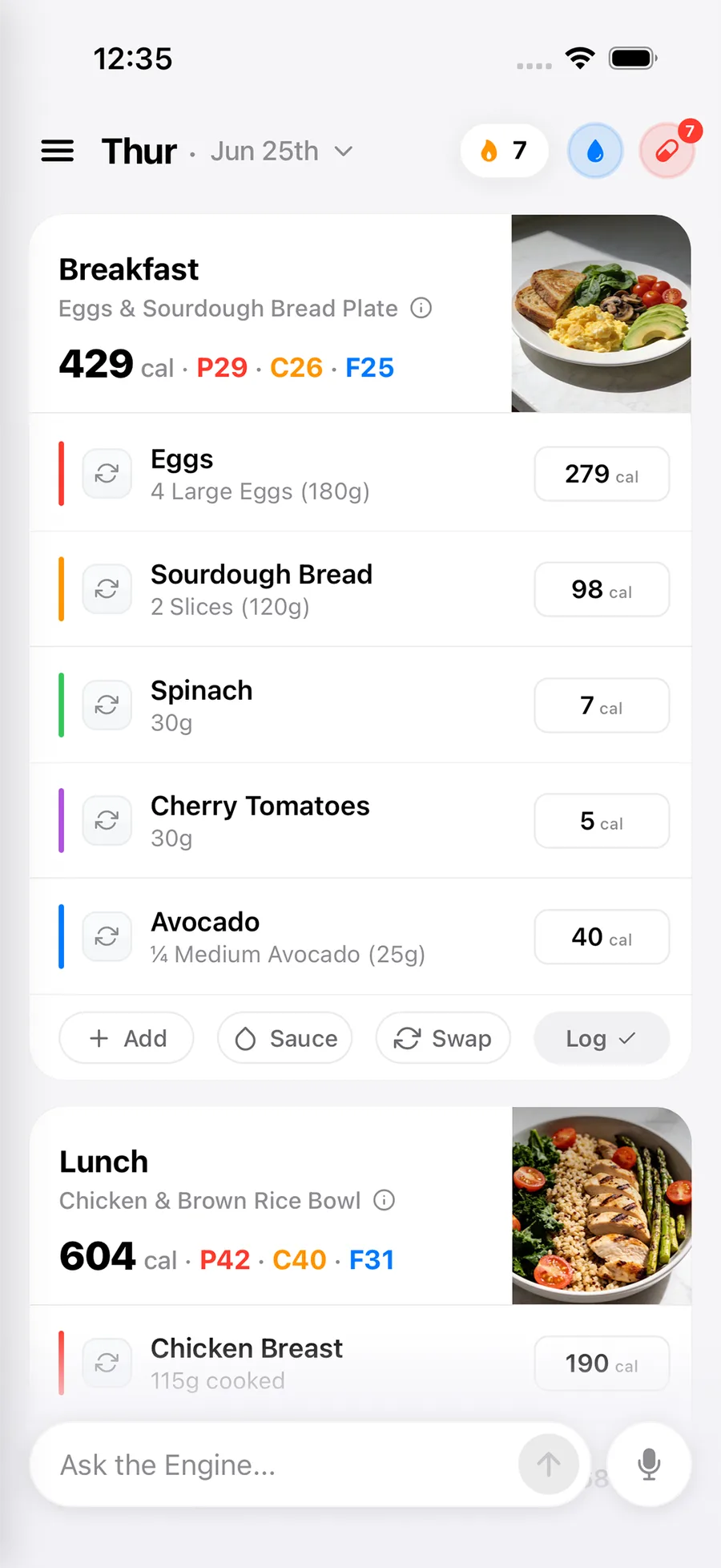
Two thousand curated templates, portioned to the gram by a deterministic engine that snaps eggs to whole eggs and bread to slices. A full week in under two seconds, at zero model cost, right every time.

A day's meal plan in Meal Engine with macros and meal cards

It asks first.

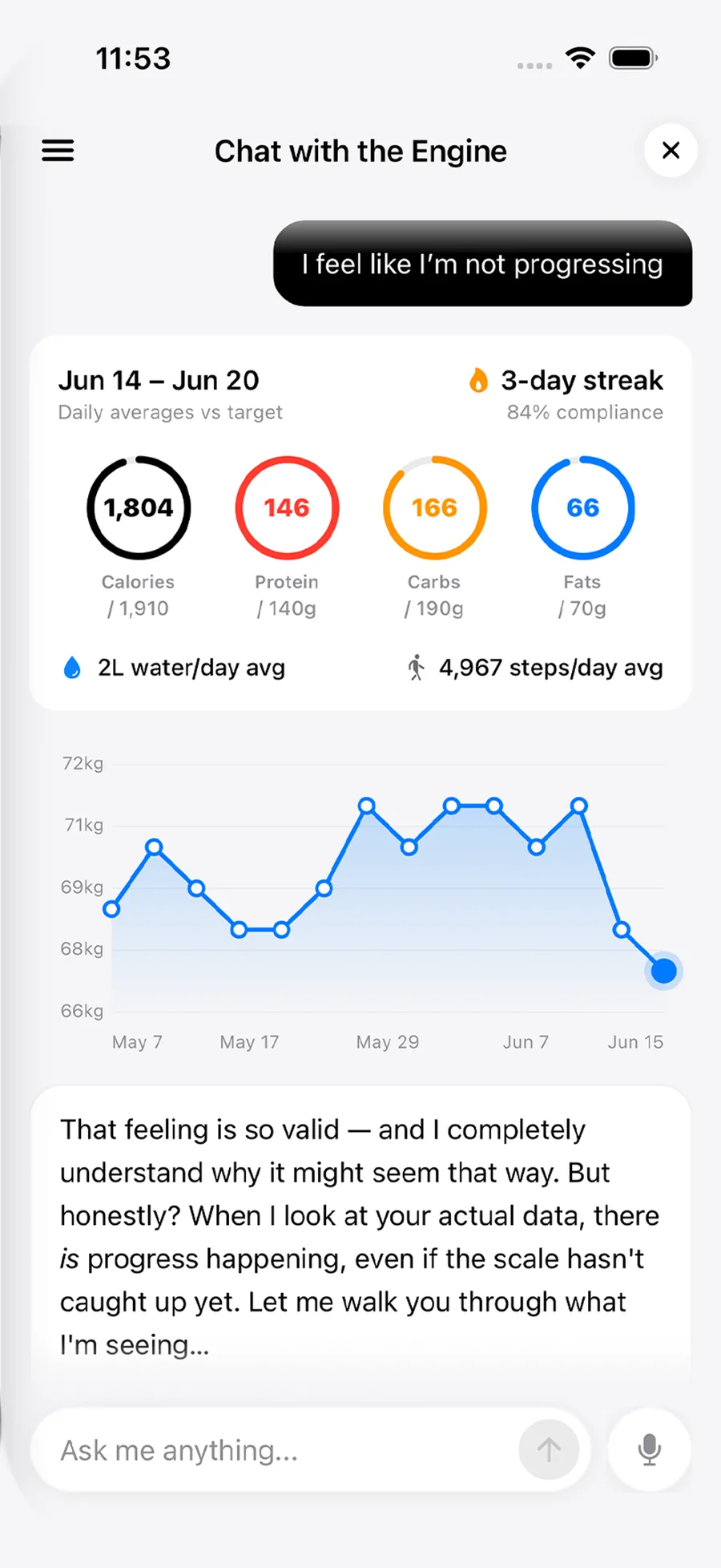
About eighty tools. Reads run on their own. Anything that changes a plan, a target or a supplement proposes, waits for a yes, then acts. Every action is logged, so nothing it does is a surprise.

The Engine coach reviewing a week in chat
App Store Google Play 5.0 out of 5 on the App Store. Seven currencies, six languages.
  • "I really like how you can swap or add foods and it just recalculates everything."
    App Store review
  • "Very user friendly, informative, flexible, well rounded food app."
    App Store review
  • "After using MyFitnessPal for years I'd finally had enough, then went on a mission."
    App Store review

The build

Six decisions that made it real.

Each one exists because the obvious approach failed first.

  • Plans run on code, not on the model.

    The models were good at explaining trade-offs and bad at fast, exact arithmetic across a week of meals. So a deterministic layer builds and re-portions every plan from a library of 2,394 curated templates, and the model interprets, explains and guides. A full week in under two seconds, at zero model cost, and the numbers are right.

  • Only true misses reach a model.

    Logging every food through an LLM was slow and expensive. Text, voice, photo and barcode now flow through one seven-tier resolver: the person's own history, their custom foods, saved meals, a verified nutrition database, and only then a model. Most logs resolve in milliseconds.

  • The coach asks before it acts.

    An agent with write access to someone's plan needs rules. Reads run on their own. Anything that changes a plan, a target or a supplement proposes first, waits for consent, then executes, and every action is audit-logged. People trust it with changes because it never surprises them.

  • Cache the part that never changes.

    Coach cost rose with usage because the prompt's shared knowledge sat below each user's name and date, so no two users ever shared a cache entry. I split the prompt into a static block identical for everyone and a small per-user block. Same traffic, more than 90% less spend, verified in production.

  • No single provider.

    A billing lapse at one provider and a drained key at another each took a feature down. Every call now routes per turn across Anthropic, OpenAI and Google with a fallback chain chosen by task. An outage degrades a feature instead of removing it.

  • Cap what one person can cost.

    A subscriber could chat their way past their subscription price. Each user has a monthly spend ceiling on the coach, and only the coach. Logging a meal is never blocked, because that is the thing they pay for. Margin protected, core use never gated.
Demonstration

This is not me. It's the AI version of me.

Made in an afternoon with the same tools I ship with. My face, my voice, my words. If you're wondering whether AI video is ready for your brand, you're looking at the answer.

Jamie Bisset Rendering. Back within the day.

Before Meal Engine

One brain, two apps. And the one that's waiting.

Lift Engine

Three years as product lead on LIFTit, the training app for Stephanie Sanzo's three-million-follower audience, built by an outside agency I direct. Over 100,000 downloads and close to a thousand ratings across both stores. I decide what gets built, review what comes back, and catch what was missed: on one pass I found a sign-in that verified a token's signature but never checked which app it was for. Fixed in both API versions.

It's becoming Lift Engine, and it now runs on Meal Engine's nutrition brain through three server-to-server services, so a fix to the calculation lands in both apps at once.

GymVid

A computer-vision app that analyses lifting form from video. Product lead, with the same agency. Paused by agreement while the two apps above take the oxygen. The IP is intact and waiting.

Live

Ask it anything about my work.

An agent grounded only in what's on this page and the decisions behind it. It can't see revenue, it can't make things up, and it stops when today's budget is spent. The same three rules the Meal Engine coach lives by.

Ask me how Jamie would approach something you're building, what a decision above actually changed, or what he's not good at.

Today's budget: checking

Meta

How this site was built.

One day. Claude Code wrote most of the code from my direction. Higgsfield generated the sequence you scrolled through and the video of me. The chat above runs on a Cloudflare function with a daily cap, the same pattern as the product. No framework, no build step: one static page and one function. I'm telling you this because the how is the point.

Start here

Three days. Free. Hear my ideas before you pay for anything.

  1. Day 1

    A call.

    You tell me what you're trying to build, what you've already got, and what's in the way.

  2. Day 2

    I review it.

    Code, architecture, the plan, or just the idea. Alone, properly, the way I'd review my own.

  3. Day 3

    A second call.

    Findings, what I'd do first, and what it would take. Yours to keep, whatever you decide.

If it's a fit, we talk about two to three days a week from October. If it isn't, you've spent three hours and gained a plan.